If you’ve ever walked into a hardware store to buy lumber, fencing, or trim for your home, you’ve probably heard the term “linear feet.” At first, it might sound confusing, but trust me, it’s actually pretty straightforward once you understand the basics. Whether you’re planning a DIY project or just trying to figure out how much material you need, knowing how to calculate linear feet will save you time, money, and headaches.
What is a Linear Foot?
Let’s start with the basics. A linear foot is simply a measurement of length in a straight line. Think of it as measuring distance from one point to another without worrying about width or height. When you measure something in linear feet, you’re only concerned with how long it is.
The difference between a linear foot and a regular foot is pretty much nothing—they’re the same thing! People just use the term “linear” to make it crystal clear that they’re talking about length only, not area or volume. It’s like saying “I need 10 feet of rope” versus “I need 10 linear feet of rope.” Same meaning, just more specific.
You’ll commonly encounter linear footage when buying materials like baseboards, crown molding, lumber, pipes, fencing, rope, chain, or any other item that’s sold by length. Stores price these items per linear foot because the width and thickness are usually standard.
Understanding the Difference Between Linear and Square Feet
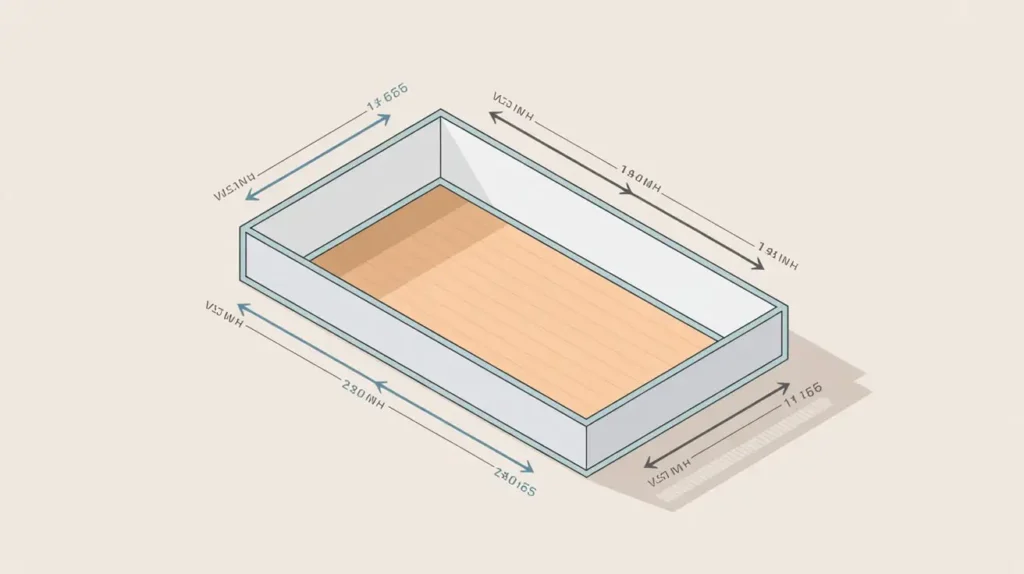
Here’s where people often get confused. Linear feet measure one dimension—just length. Square feet, on the other hand, measure area, which means you’re multiplying length times width. If you’re measuring a floor, you use square feet. If you’re measuring trim that goes around that floor, you use linear feet.
Think about it this way: imagine you’re putting a border around a garden. The border itself is measured in linear feet because it’s just a long strip going around the perimeter. But the garden space inside? That’s measured in square feet because it has both length and width.
How to Calculate Linear Feet?
Calculating linear feet is easier than you think. All you need is a measuring tape and maybe a calculator if you’re dealing with multiple measurements. Here’s the simple process to follow.
First, grab your measuring tape and measure the length of whatever you’re working with. Let’s say you’re measuring a wall where you want to install baseboard trim. Start at one end and measure straight across to the other end. If your wall measures 12 feet, that’s 12 linear feet of baseboard you’ll need for that wall.
Example: You’re building a fence around your backyard. One side is 50 feet long, another side is 30 feet, the third side is 50 feet, and the last side is 30 feet. Add them all up: 50 + 30 + 50 + 30 = 160 linear feet of fencing needed.
But what if you’re measuring something in inches? No problem. Just convert those inches to feet by dividing by 12. So if something measures 36 inches, that’s 3 feet (because 36 ÷ 12 = 3). Always work in the same unit to avoid confusion.
If you have multiple pieces or sections, measure each one separately and then add them all together. This is super common when you’re working on a room with multiple walls or installing trim around doors and windows.
How to Calculate Square Footage from Linear Feet?
Sometimes you need to convert between linear feet and square feet, especially when you’re working on flooring projects or calculating material coverage. The key thing to remember is that you need to know the width of your material to make this conversion.
The formula is pretty simple: multiply your linear feet by the width (in feet) of the material. This gives you the total square footage. Let’s say you’re buying decking boards that are 6 inches wide (which is 0.5 feet). If you need 100 linear feet of these boards, you’d calculate: 100 × 0.5 = 50 square feet.
Real-world example: You’re installing hardwood flooring. Each plank is 3 inches wide (0.25 feet) and you need 200 linear feet of planks. The square footage you’re covering is: 200 × 0.25 = 50 square feet of flooring.
Going the other direction—from square feet to linear feet—works too. If you know the total area you need to cover and the width of your material, just divide the square footage by the width. So if you need to cover 100 square feet with boards that are 0.5 feet wide: 100 ÷ 0.5 = 200 linear feet of boards needed.
Common Mistakes to Avoid
Even though calculating linear feet is straightforward, people still make mistakes. The biggest one? Mixing up linear feet with square feet. Remember, if you’re just measuring length along a straight line, it’s linear. If you’re measuring a flat surface, it’s square footage.
Another common error is forgetting to account for waste. When you’re cutting lumber or trim, you’ll inevitably have some scraps. It’s smart to add 10-15% extra to your calculations to cover mistakes, bad cuts, or damaged pieces. Better to have a little left over than to come up short!
Don’t forget about corners and angles either. If you’re installing baseboard trim, you need to account for the material lost when making angled cuts at corners. Those 45-degree cuts can add up, especially in rooms with lots of corners.
Practical Tips for Measuring
Pro tip: Always measure twice and buy once. It’s an old saying, but it’s gold. Taking an extra minute to double-check your measurements can save you a trip back to the store and wasted money.
When measuring long distances, get someone to help you. Trying to measure a 50-foot fence line by yourself can lead to errors. Having an extra set of hands makes the job easier and more accurate.
Use a quality measuring tape that won’t bend or sag in the middle. For longer measurements, consider using a laser measuring tool—they’re affordable these days and super accurate. If you want to learn more about different types of measuring tools, check out this helpful guide on measuring tools.
Write everything down as you go. Don’t trust your memory, especially if you’re measuring multiple rooms or sections. A simple sketch with measurements noted can be incredibly helpful when you’re at the store trying to figure out what to buy.
When You’ll Need These Calculations
Knowing how to calculate linear feet comes in handy way more often than you’d think. Obviously, it’s essential for home improvement projects like installing trim, building decks, or putting up fencing. But it’s also useful for landscaping projects, like edging garden beds or laying out irrigation lines.
If you’re into crafting or woodworking, linear footage helps you figure out how much material to buy for your projects. Even if you’re just organizing your garage and need to buy shelving or hanging storage, understanding linear measurements will help you get the right amount. For more detailed construction and measurement tutorials, Family Handyman has some excellent resources.
The bottom line is this: linear feet is one of those practical skills that makes everyday tasks easier. Once you get comfortable with it, you’ll find yourself using it all the time without even thinking about it.
Final Thoughts
Calculating linear feet really isn’t complicated once you get the hang of it. It’s just measuring length and adding up those measurements. Whether you’re tackling a big renovation or a small weekend project, understanding linear footage will help you buy the right amount of materials, save money, and complete your projects with confidence.
The key things to remember: linear feet measures length only, always add a buffer for waste, and don’t confuse it with square footage. With these basics down, you’re ready to handle any project that comes your way. So grab that measuring tape, make your calculations, and get building!
More Useful Calculators & Tools
Explore our comprehensive collection of calculators and conversion tools designed to make your life easier